WALTON, Henry
Henry Walton was baptised at Tivetshall St Mary, Norfolk on 5 January 1746, second of three children of Samuel Walton (1710-1797), a wealthy farmer, and his wife Ann née Newstead (1711-1797) of Dickleburgh, Norfolk. In 1765, aged nineteen, Walton moved to London, although apparently not with the intention of becoming an artist, as with a private income he had no need to earn a living by painting. But in 1770 he began studying art at the Maiden Lane Academy in Covent Garden, London, about which time he became a pupil of Johann Zoffany (13 March 1733-11 November 1810). In 1771, Walton was living at Great Chandos Street, Covent Garden, painting portraits in oil and miniatures, often featuring close friends and family, about this time he took as an apprentice, the miniature painter Edward Miles (14 October 1752–7 March 1828), of Great Yarmouth, Norfolk who remained with him until 1794. In 1771 Walton was elected a fellow of the Society of British Artists, where he exhibited two portraits and in 1772 was elected a director of the society, showing four works at that year's exhibition. He was married, by licence by her brother-in-law Revd Robert Malyn of Occold, at Wortham, Suffolk on 10 September 1771, Elizabeth Walton, née Rust, second daughter of the ten children of Robert Rust, a draper of Wortham, Suffolk, they had no children. Shortly after the marriage Walton purchased Oak Tree Farm, in the village of Burgate, near Wortham, where he converted one of the cottages into a house and studio. There Walton painted landscapes, although these remain unidentified, and during the early to mid-1770s Walton seems to have worked principally as a portrait painter, among his most celebrated sitters being Edward Gibbon (8 May 1737-16 January 1794), whom he painted on at least six occasions. Other prominent sitters included the Revd William Gilpin (4 June 1724–5 April 1804), Horatio Walpole, 1st Earl of Orford (12 June 1723–24 February 1809), and Lord Cornwallis (31 December 1738–5 October 1805), all these portraits were engraved during the artist's lifetime, the print after Lord Cornwallis hanging in many households in Suffolk. At some time during 1773-1974 Walton reputably travelled to Paris, making the acquaintance of the French artist Jean-Baptiste Siméon Chardin (2 November 1699-6 December 1779) and according to his Great Yarmouth friend Dawson Turner (18 October 1775–21 June 1858), Walton frequently went to Paris ‘with a view of studying or of buying pictures’. In November 1778 Walton was turned down for membership of the Royal Academy after which he ceased to exhibit altogether and during the 1780s, Walton devoted himself increasingly to his farm in Burgate being a Member of the Diss Association for the Prosecution of Horse Stealers in 1793. Among his more significant portraits and conversation pieces of his later period are William Crowfoot (9 September 1780-13 November 1848) and of the Burroughes Brothers, Boating on the River Waveney (c.1780), Sir Bellingham Graham, 5th Bt. (bapt 14 June 1729-3 October 1790) and his children (c.1785), and Sir Robert Buxton (27 October 1753–7 June 1839) and Lady Juliana Buxton (13 Nov 1752-5 February 1843) with their daughter Anne (1786) he also travelled to Yorkshire, where he painted portraits of important local families. In 1784 he was living in Half Moon Street, London and in 1790 in Curzon Street where he was an established picture dealer, and adviser to some major private collectors, notably Lord Lansdowne (2 May 1737–7 May 1805), Lord Fitzwilliam (30 May 1748-8 February 1833), and Sir Thomas Beauchamp-Proctor (29 September 1756–29 June 1827), to whom he sold a Poussin from the collection of Sir Joshua Reynolds. Walton's expertise was such that ‘there was scarcely a picture of note in this country, with the history of which he was unacquainted’. Walton continued to paint local Norfolk and Suffolk families well into the early 1800s, among his last works being an unfinished portrait of John Trew, an old servant of his friends the Frere family, painted in 1810. By now Walton was in poor health having contracted a fever ‘which caused a great alteration in his appearance’. One evening in May 1813, on returning from a party to his London lodgings at Mrs. Fraser in New Bond Street, Walton complained of feeling unwell. He was found dead in bed the next morning, the immediate cause of death being described as hydrothorax and pleurisy. Walton was buried near his parents in St Mary's churchyard at Brome, Suffolk and his tomb is inscribed ‘Henry Walton, gent. 19 May 1813 aged 66’. His will, dated 29 March 1812, was proved on 4 September 1813.
Royal Academy Exhibits
from Hill Street, Berkeley Square, London
1778 322 A Girl Buying a Ballad
1779 338 A Scene in the Spanish Barber
339 A Group of Figures, with a Fruit Barrow
Works by This Artist
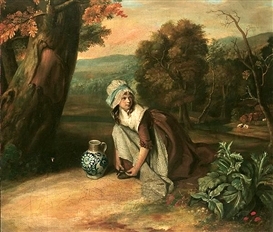
|
A Country MaidOil on canvas |
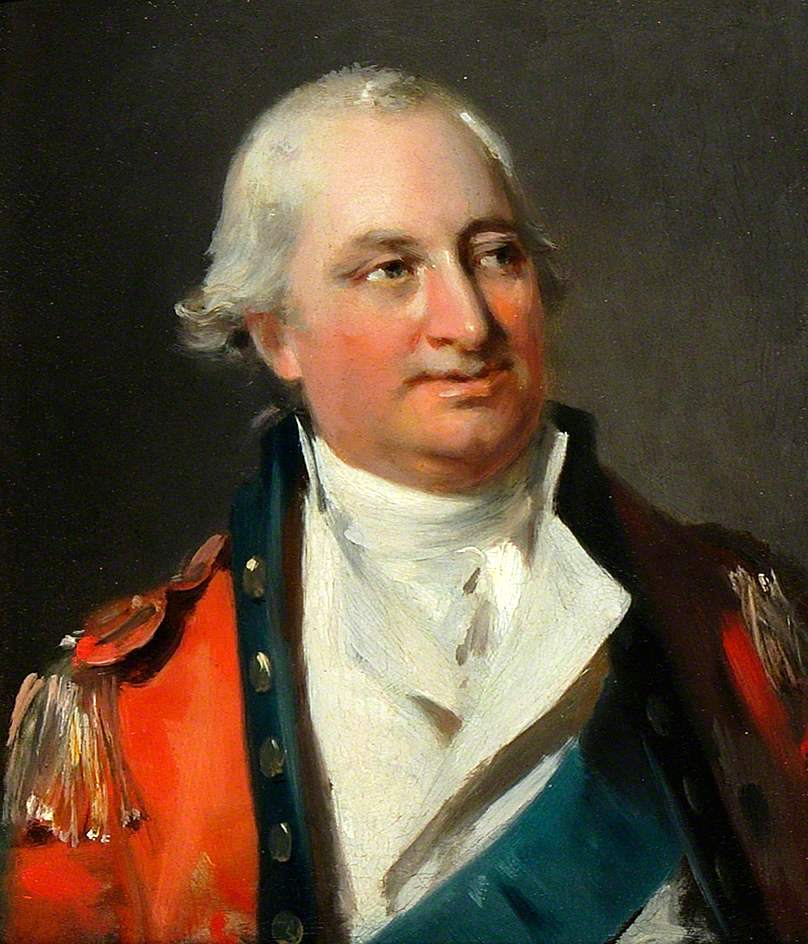
|
Charles Cornwallis, 1st Marquess Cornwallis (1738–1805)Oil on canvas
|
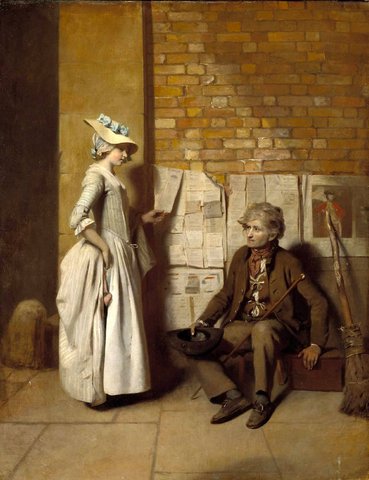
|
A Girl Buying a BalladOil on canvas
|
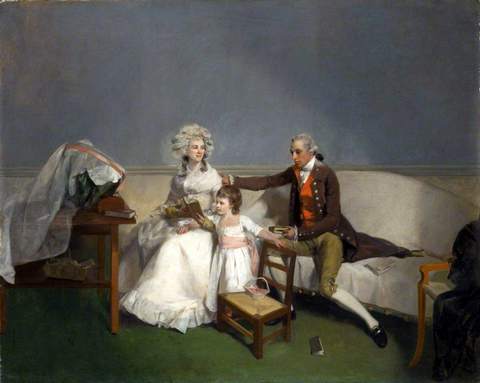
|
Sir Robert and Lady Buxton and Their Daughter AnneOil on canvas
|
|
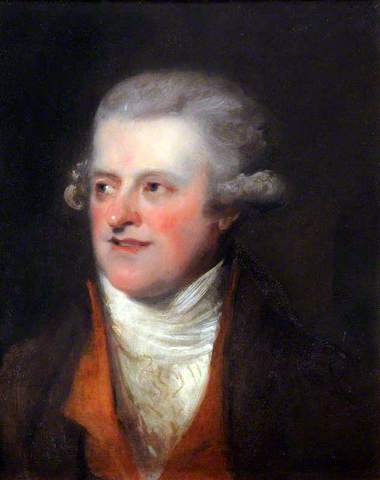
John Frere (1740–1807)Oil on oak panel
|
|
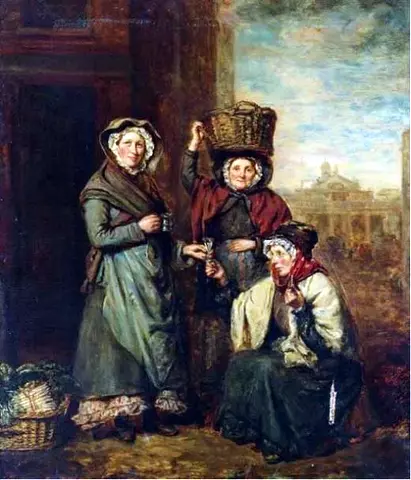
Street Vendors, Covent GardenOil on canvas
|